
Deschooling Your Child: Nurturing a Smooth Transition to Home Education
As you embark on the exciting journey of home education, it is crucial to acknowledge the concept of “deschooling.” Deschooling refers to the process of helping your child transition from a traditional school setting to homeschooling by allowing time for them to adjust, rediscover their love of learning, and develop a new mindset. Let’s explore the importance of deschooling and provide some practical tips to support you in this transformative phase of your homeschooling journey. Let’s dive in and discover how to create a smooth transition for your child as they embrace the freedom and joy of home education.
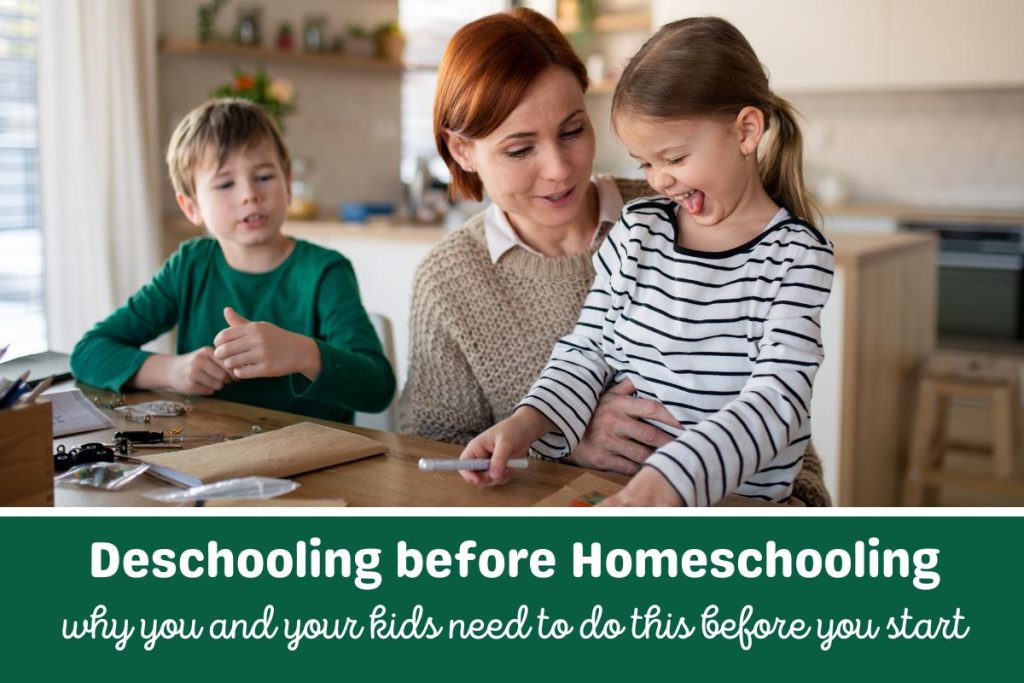
What is Deschooling
Whether your child has been in school prior to starting your home education journey or not there’s probably still a need for deschooling. It may not be them that needs to deschool themselves but you instead. Do look at this advice and think about it from both perspectives.
As a former teacher and having been in school from when I was 4 till 18 it was a process that I knew that I needed to do. I was fortunate that I had taught outside of a classroom and have always been a firm believer that education isn’t about spoon-feeding facts to kids. It’s about creating a well-rounded child that loves to learn in whatever way they can from whatever method. But there was still some expectations I had from formal education that I needed to let go of.
So I went through this process myself and before we started we spent a LONG summer going through it with the kids as well. Here’s the process that we did.
Understand the Need for Deschooling
You need to recognise that deschooling is essential to help your child and you transition mentally and emotionally from a structured school environment to a more flexible and personalized approach to learning. Traditional schooling often focuses on rigid schedules, grades, and external rewards. And this may still be part of your homeschooling journey especially if you follow traditional or structured homeschooling.
But most importantly deschooling allows you all to release any preconceived notions about education and rediscover their innate curiosity and love for learning. I’ve always been someone that loves learning – I take a new language a year to learn to get a grasp of it just for fun! This year it is German if you are wondering! But, for my kids, it was very much about how our day needed to be timed to the minute and know which subject was coming next. As well as lots of I can’t do this and I’m no good at this attitude because of what they had been told in school.
Taking time to dissect these emotions and beliefs we were slowly able to reform a new structure to how we all perceived education. That is the importance of deschooling in my opinion. It can take a long time or much shorter but from experience, it was something that we did have to revisit from time to time especially when doubts crept in.
Embrace a Flexible Schedule
During the deschooling period, embrace a more relaxed and flexible schedule. Give your child time to decompress and adjust to the newfound freedom of homeschooling. Allow them to pursue their interests, engage in unstructured play, and explore topics that genuinely captivate their curiosity. By giving them space to breathe and explore, you lay the foundation for a joyful and self-directed learning experience.
This is why we did our deschooling period over an extended summer. We never really stopped learning but it didn’t look anything like the school situation.
Focus on Unstructured Learning
Encourage unstructured learning experiences that foster creativity, independent thinking, and self-expression. Provide access to books, educational games, puzzles, art supplies, and other resources that allow your child to explore and learn at their own pace and according to their interests. These unstructured learning opportunities will help reignite their intrinsic motivation and natural desire to learn.
We all loved this approach and many subjects this was how they continued, following my kids interests as well as delving really far into some topics that they thought would not interest them but discovered how fascinating they were.
It’s great to homeschool and there’s so many other things that you can learn – check out these life skills that are ideal to do with your kids instead of academic subjects.
Promote Lifelong Learning
Reframe the concept of learning as a lifelong journey rather than a confined school experience. Discuss with your child how learning happens in various settings beyond traditional classrooms and encourage them to explore their passions and interests beyond conventional subjects. By nurturing a love for learning that extends beyond textbooks, you empower your child to become a self-motivated and curious lifelong learner.
As I said above I am a lifelong learner. I am fascinated by things and jump in feet first to do it. Languages, like German, are not something that I find easy but it’s a want to do I’m self-motivated. However, reading about the latest Egyptian discoveries or planning a trip to a place to explore its history is just because I’m curious I want to know more about it.
I see it now in my kids, my youngest has decided they want to learn to knit, they’ve been watching YouTube videos, got out my supplies and are creating a very long scarf. The other spends hours watching video game tutorials and implementing them in their game to create the best zoo, and then researching the creatures to improve it further.
Foster Open Communication
Maintain open lines of communication with your child throughout the deschooling process. Encourage them to express their thoughts, feelings, and concerns about the transition to homeschooling. Actively listen to their perspectives and validate their experiences. This open dialogue will help build trust, create a supportive learning environment, and ensure that their unique needs are met during this period of adjustment.
Connect with the Homeschooling Community
Seek connections with other homeschooling families or local support groups. Engaging with like-minded individuals can provide valuable guidance, resources, and a sense of community for both you and your child. Attend homeschooling events, join online forums, and participate in co-op activities to foster friendships and share experiences with others who have gone through or are going through the deschooling process.
I found communities on Facebook that were for our local area and discovered groups that we wanted to join as well as activities to do. We attended just social groups at first but then once we had established what we wanted from home educating we joined many more.
Remember, deschooling is a process that takes time, patience, and understanding. Embrace this period as an opportunity to rediscover the joy of learning and create a foundation for a fulfilling and personalized homeschooling journey.

