August Nature Study Ideas for Kids
Late summer is bursting with things to notice, and without planning a full lesson you can get so much out of the world around us. Here’s some ideas of simple nature study you can dip in and out of, whether you have five minutes in the garden or an hour at the park.

Simple Ideas for Nature Study in August
August is full of easy wins outdoors. We dip into these prompts when time is tight, no big prep, just step outside when you can.
What you’ll need
- A small notebook or nature journal, pencils/colours
- Phone camera or magnifying glass
- Zip bag for finds (seed heads, leaves, pebbles)
- Weather‑wise clothing and water
The Night Sky (Perseids + Summer Constellations)

Try this: Choose a clear evening and set a 15‑minute timer. Lie back and count “shooting stars” (the Perseids peak mid‑August). Pop a blanket in your bag and you’re set.
Journal idea: Sketch the Big Dipper/Plough and trace to find Polaris (North Star). Add the date/time and cloud cover.
Extend: Track moon phases with a simple circle each night.
Check out our in-depth Night Sky Nature Study For Kids for even more ideas to get the most out of star gazing.
Butterfly Observation
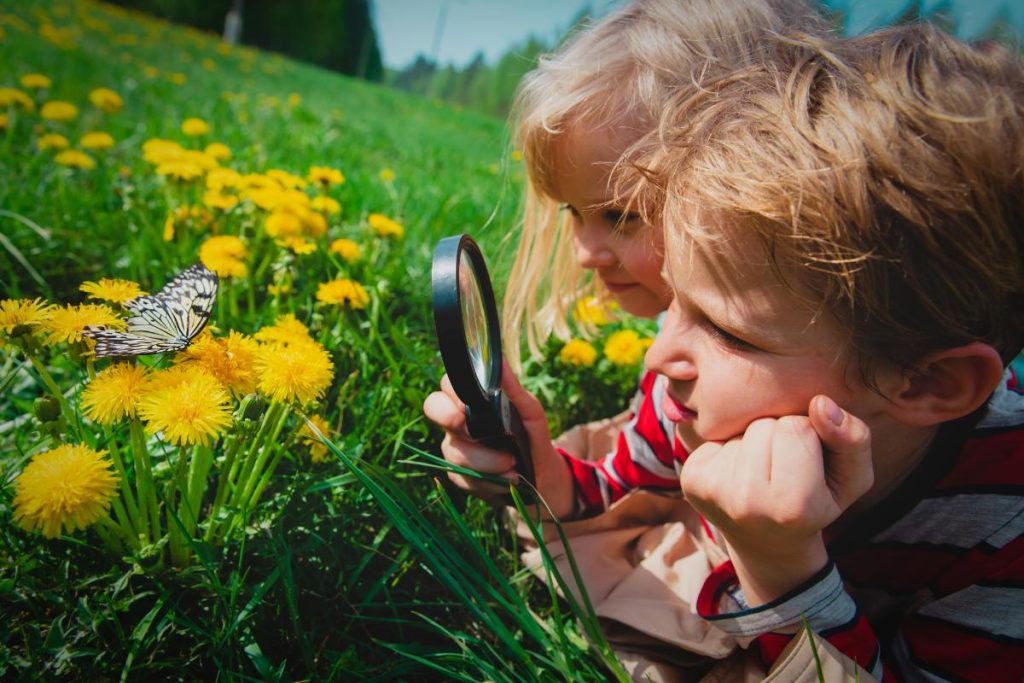
Try this: Sit by a patch of flowers and tally visits for 10 minutes. Which colour flowers are most popular?
Journal idea: Draw a butterfly and label body, antennae, proboscis. Note the plant it preferred.
Extend: Plant or note nectar sources (buddleia, lavender, verbena).
Your garden is a fantastic area for nature study – check out our year of backyard nature study but also to start garden schooling and it really doesn’t matter how big or small your space is just get started.
Pond Exploration
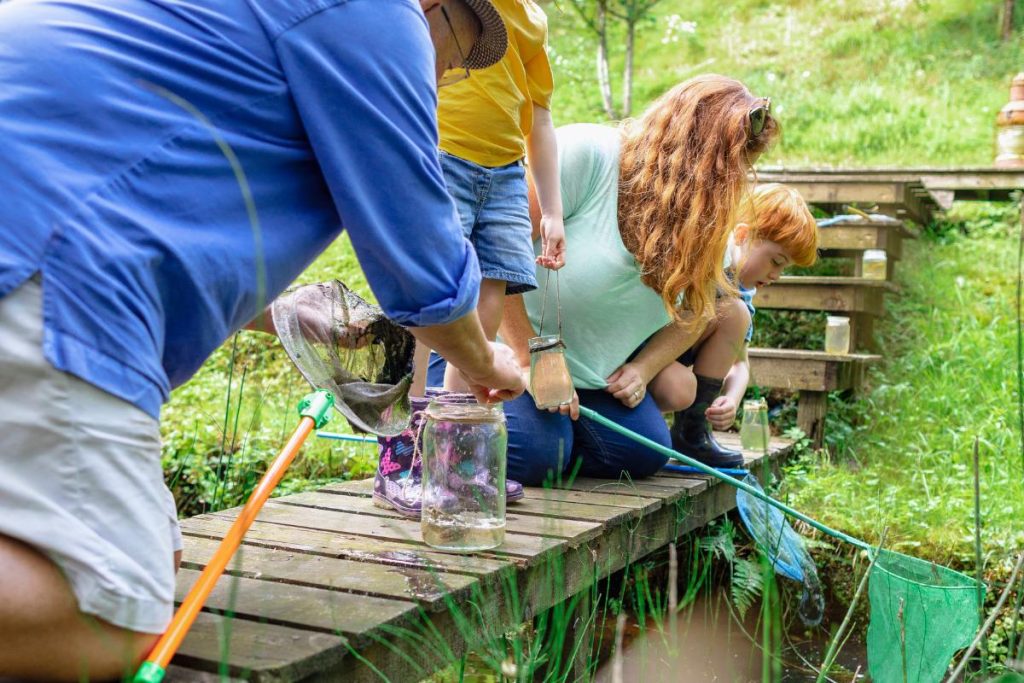
Try this: Use a small net or clear jar to observe wrigglers (return them gently). Look for dragonflies, water boatmen, and pond snails.
Journal idea: “Top 3 things we spotted” with quick sketches.
Extend: Visit the same spot again in September, what changed?
Bird Migration Watch
Try this: Early morning or evening, listen for swifts/swallows and watch their flight. Are numbers changing as the month goes on?
Journal idea: Arrow map, draw where you think birds might be headed and write a question you’d like to answer later.
Seed Collection and Planting
Try this: Find seed heads (poppies, honesty, cow parsley, sunflowers). How do they travel, wind, hooks, or snack for birds?
Journal idea: Tape in a tiny seed (or draw it) and note the parent plant.
Extend: Sow a few now or save in a labelled envelope for spring.
Cloud Watching
Try this: Spend 5 minutes naming cloud types you see (cumulus = cotton balls, cirrus = wispy hair).
Journal idea: Shade the sky, how much is covered today (0/8 to 8/8)? A fantastic way to introduce some concept of fractions to your younger children.
Extend: Compare a warm, humid day vs. a breezy day.
Rock and Mineral Exploration
Try this: On a walk, collect two contrasting stones. How are they different, colour, texture, layers, sparkle?
Journal idea: Do a simple rub with a crayon and label “smooth/rough”.
Insect Study
Try this: Gently lift a stone or log, what’s underneath? Count legs and look for segments.
Journal idea: “Bug hotel guest list” with quick notes on where each creature was found.
Pitfall traps are a great way to collect the insects that are scurrying around and then you can easily take macro photos or draw them in nature journals. Not sure where to start with taking nature photographs then check out our guide for homeschoolers on Nature Photography it’s simple to start and your kids will love this addition to nature study and journalling.
Make it work in real life
Short on time? Pick one prompt and set a 10‑minute timer.
Mixed ages? Older kids sketch/label while littles tally or colour.
City‑based? Pots, pavements, parks and even verges are brilliant!
FAQs
What ages is this for? From curious preschoolers to independent teens, adapt depth and tools to suit your child.
What if it rains? Work by a window, collect seeds on a quick dash, or do the night‑sky journal on a dry evening later.
Is this aligned to UK seasons? Yes, timings reflect late‑summer in the UK, but families elsewhere can adapt by noticing what’s happening locally.
Looking for ideas for the next month check out September Nature Study Ideas for more inspiration.