The Structure of the Earth
We’re currently working through the first section of the marine science iGCSE and looking at the Earth and its Oceans. This second section follows on from our Earth in Space session and looks at the Structure of the Earth. So here you go our session on The Structure on the Earth.

What Kids Will Learn about The Structure of the Earth
In this single session, your kids will learn more about the structure of the Earth and the importance of the core!
Learning Outcomes
- The Earth is formed with different layers
- What the core is made from
- The 2 different types of core
- What the mantle and the crust are made from
- The importance of the inner core and it’s force
Recommended Reading for Learning about The Structure of the Earth
This post may contain commission or affiliate links. As an Amazon Associate, I earn from qualifying purchases.
There are loads of great books about Earth Sciences which are great for this topic. I would recommend looking back at our first session for our Marine Science work and the same books apply.


These 2 books are great for most topics covered in the Earth and its Oceans section of the Marine Science iGCSE. See what we wrote about them and why we chose them below:
These Smithsonian Knowledge books, Planet Earth and Ocean cover all of the areas with great pictures and detail that we studied in the unit study. There is a little overlap between the two however both have more than enough information to make it worthwhile buying both. These are aimed at “tweens and early teens” there is fantastic information to form a springboard to get started delving deeper if your kids want to.
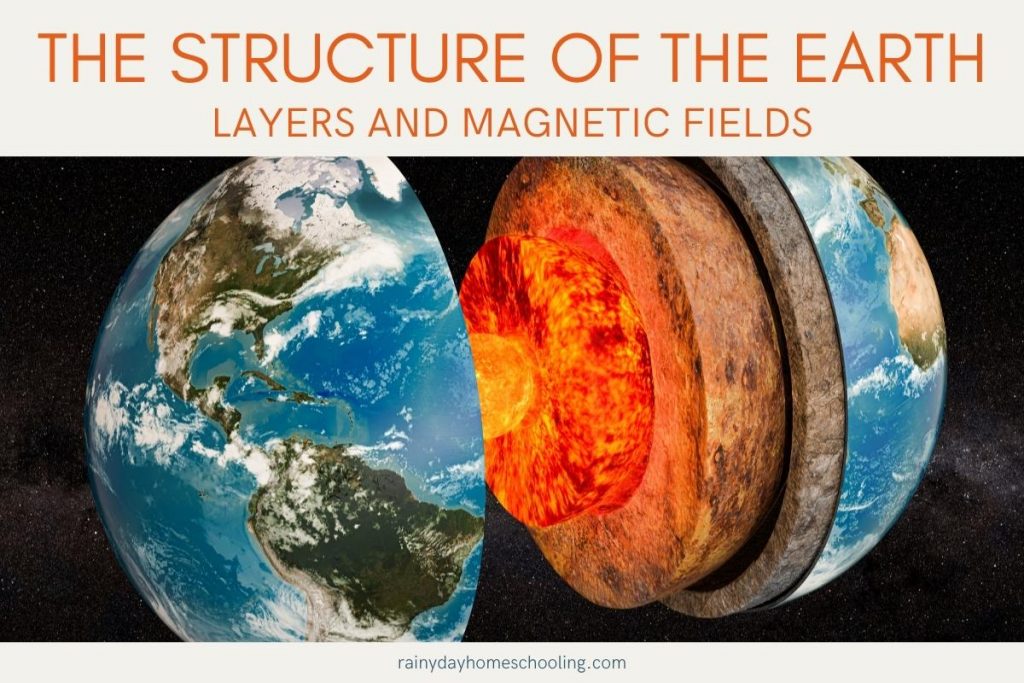
The Structure of the Earth
It may seem strange to study marine science and be looking at the structure of the Earth and in our previous session all about the Earth and its place in the solar system. But both these topics really play an important part in how the oceans work from tides, and ecosystems to some of the amazing ways that animals navigate.
Even for a degree in Marine Zoology which I completed many years ago one of the first year topics was the Evolution of the Earth which covered all of this content from the creation of the solar system to the structure of the earth. It gives a good understanding moving forward.
The Structure of the Earth
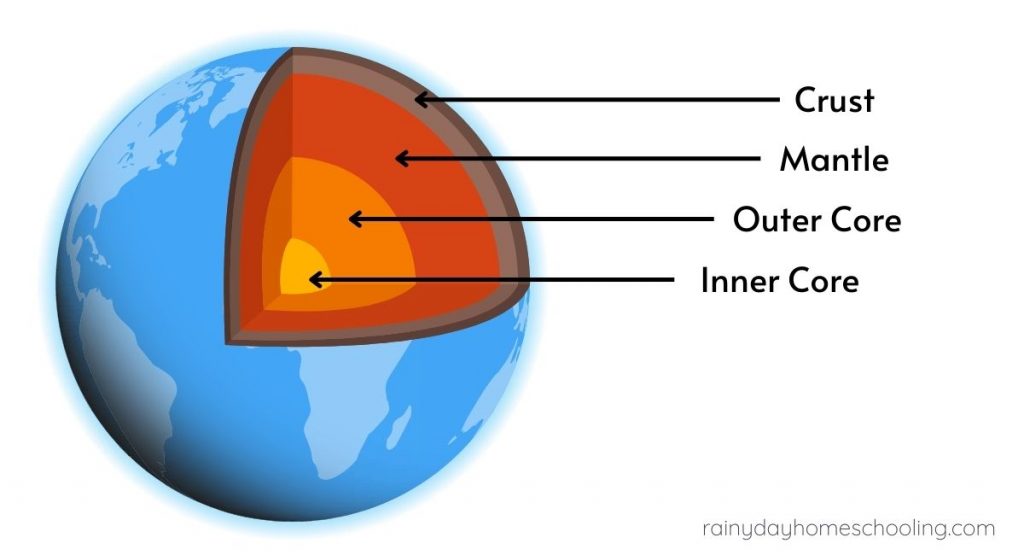
The earth is a rocky planet, but it’s not a solid piece of rock, nor it’s a rock sphere floating in space like a helium balloon. Instead, it’s made up of different layers of materials so let’s look at them in more detail.
There are 3 main layers of the earth
- The Core which is split into 2 different layers the inner and outer core
- The Mantle
- The Crust
It is typical to talk about the layers from the one under our feet to that at the centre. The heat and pressure increase as you go down, with temperatures in the core upto 6000°C.
This video is fantastic it explains the different layers what they consist of, the depth as well as introducing the topic of Tectonic Plates (coming next in our sessions) and the magnetic field. Watch this to get an understanding of it all in one place.
Make a Model of the Layers of the Earth
Use the knowledge from the video to create a model of the earth – there are lots of different ways to do this – why not check out our ideas on Pinterest?
The Crust
The crust is the rocky part of our Earth, it’s the top layer and forms the land and bottom of the oceans. It’s split into tectonic plates which “float” on the mantle.
The Mantle
The mantle is made up of Magma this is semi-molten rock and it forms the largest part of the Earth’s Structure. It’s also the heaviest and makes up about 85% of the Earth’s mantle.
The Outer Core
The outer core is made up of iron and nickle and is liquid it surrounds the inner core.
The Inner Core
The inner core of the earth is solid iron. It’s between 4000 and 6000°C but because of immense pressure it is under it stays solid instead of melting.
This inner core of iron is so important it creates the magnetic field around the earth!
The Earth’s Magnetic Field
Because the inner core is made of iron and iron is a magnetic material it creates a magnetic field around the Earth!

This field is why when we use a compass it points north to south. Want to know this video is great to understand more about it and includes 1 reason why it is important.
But that’s not the only reason.
Some animals use this magnetic field to help with migration. Our family’s favourite animal – sea turtles likely use the magnetic field of the earth to help with migration as well as returning to the same beach. Inside their heads, they have their own “compass” a magnetic material. Of course, they would need other cues as well to return to the same beach but as rocks and minerals on the beach would have their own magnetic signature due to different composition this may also help.


Magnets are great to explore with kids and we have this set pictured above for science and marine science for hands-on investigations.
Make a Compass
Can you make a compass to find magnetic north. Or how about using a bar compass and some iron filings if you have them to show a magnetic field.
Facts to Remember
- The Earth is made up of layers
- There are 3 layers
- Crust
- Mantle
- Core – which is split into Inner and Outer Core
- The Inner Core is made of iron
- Iron is magnetic and this concentration of iron in the centre creates a magnetic field around the Earth
- The Magnetic field can be seen with a compass
- Animals use the magnetic field like sea turtle to migrate and navigate like we use a compass
Coming Next
Following on from the Structure of the Earth we’re going to be learning about Plate Tectonics in more detail.