Simple Ideas for Developing Geography Vocabulary in Your Homeschool
Geography is so rich with new vocabulary for your kids to learn from landscape features to human settlements and the world as a whole and our impact on it. So it’s important your help your kids to develop their vocabulary and understanding of it. We’ve put together some fun ways to help your kids to do this. Over the years we have used all of these ideas as we work through different ages and units we build on this and introduce new areas. So here you go ideas for developing geography vocabulary with your kids.
Geographical Vocabulary
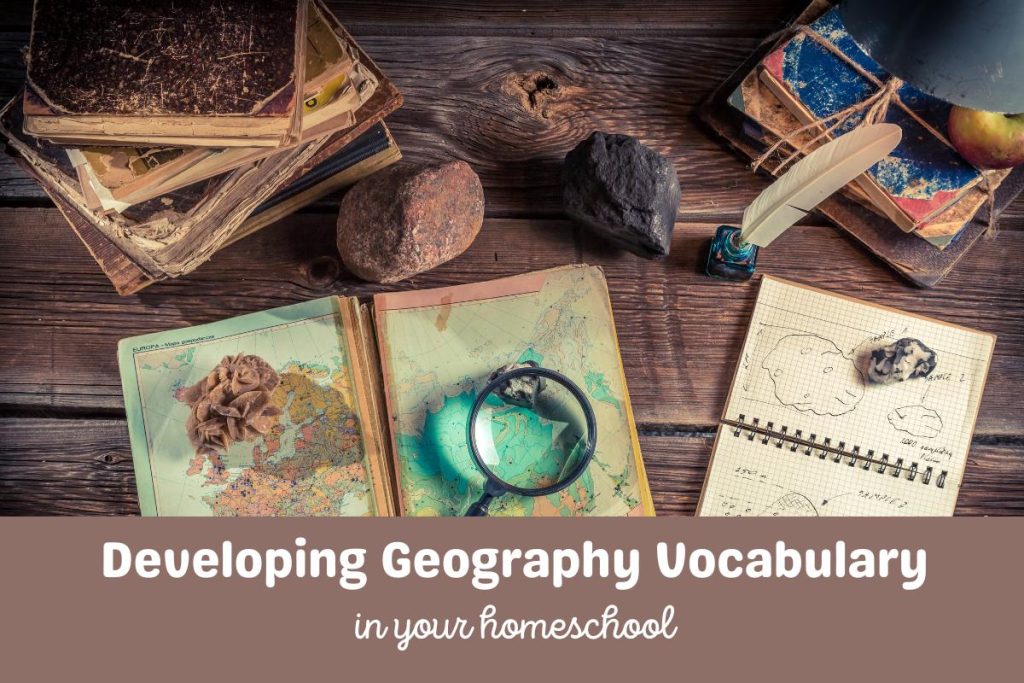
There are many features of the physical and human environment that your kids will encounter when learning about geography. They have very specific words and phrases and to help your kids to get to know them, extend their own language and use them appropriately we have some fun ways that you can develop this with your kids.
Vocabulary Journal
If you have young kids or kids that love to journal then creating a geography vocabulary journal is a great way to get started.
It’s simple and you can create multiple ones that focus on different areas – for example, you could have one that focuses on physical geography and another that focuses more on aspects of human geography.
Combine pictures that you may have – old-fashioned postcards, pictures from tourist brochures, books, internet, and photographs you may have are great sources of these – with text, information and even examples that your kids may find in their studies.
Geography Dictionary
This post may contain commission or affiliate links. As an Amazon Associate, I earn from qualifying purchases.
Not all kids are into journaling and instead prefer something simpler. A geography dictionary is a great way to do this. We use a Vocabulary notebook to do this with our older kids. They add the words and then a definition and I ask that they write a sentence with it being used.


We used to keep specific subject ones but have found as they get older that there is more of a cross-over in vocabulary and they weren’t using words outside of that situation so instead we moved to single vocabulary dictionaries.
One child color codes words for specific subjects with colorful highlighters and the other just adds everything in. Yes, we use it with our mainstream educated child as well especially whilst completing homework and revision.
Resources for Developing Geographical Vocabulary
As well as specific activities, practical work, and field trips there are lots of other ways that you can support your kids to develop their practical vocabulary.
Use Poems, Stories and Non-fiction Books
There are lots of examples of poems that focus on the environment, climate, ecosystems, and the human environment. Poems are great for extending vocabulary and perfect for sharing with children.
Books are also another great source, you’ll find in our unit studies that we have included links to a wide variety of books from picture books and stories to our favorite non-fiction books.
Newspaper and Magazines
Magazines like Nat Geo for Kids and children’s newspaper such as First News and The Week Junior are great way to learn about developing situations, the world around them and use vocabulary that is appropriate for the age ranges.
Tourist Information Brochures and Leaflets
If you head out somewhere then grab some maps, brochures, and leaflets. These will include information about your local area and may have some specific words to it, as well as provide a great resource for some of the unit studies in geography and history you do with your kids.